
One Bedroom - A$472.50
Two Bedrooms - A$537.50
Three Bedrooms - A$602.50
Four Bedrooms - A$667.50
Carpet Cleaning - A$195.00
Why Wash Your House Exterior – More Than Just Cosmetic
A lot of Newcastle homeowners think about exterior washing as a cosmetic thing. Something you do before a party, or when the neighbours start giving you looks. But leaving salt, mould, and coastal grime sitting on your home’s exterior is actively working against you — and the longer it sits, the more expensive the consequences get.
Newcastle’s Coastal Challenges
Newcastle’s climate is genuinely tough on homes. Constant salt spray settles on every exposed surface and keeps building with every onshore wind. Humidity creates perfect conditions for mould to take hold fast. Sand and grime works its way into textured finishes. Storm seasons leave residue behind that most people don’t notice until it’s already staining. It’s year-round. There’s no off-season for coastal buildup.
What Neglect Actually Costs You
Salt and mould break down paint at the surface level — once it starts chalking and fading, you’re looking at a repaint, not a wash. Surface mould becomes structural mould faster than most people expect, especially in shaded areas and behind cladding. Some discolouration, if left long enough, won’t fully reverse even with professional cleaning. Mould spores on exterior walls also affect the air quality immediately around your home — near windows, vents, and outdoor living areas — which is a genuine concern for families with kids or anyone with asthma.
The Maintenance Investment
Regular house exterior cleaning Newcastle isn’t a luxury spend — it’s what delays the much bigger spend. Washing your home every 12 to 18 months in a coastal location can extend your paint life by three to five years. A full exterior repaint on a Newcastle home typically runs $5,000 to $15,000 depending on size. A professional wash at $400 to $600 is what keeps that bill further down the road.

Surfaces We Clean – Every Newcastle Exterior Type
Not all homes are built the same, and not all surfaces can be cleaned the same way. One of the biggest mistakes with DIY exterior washing is treating every surface like it needs the same approach — get it wrong and you’re forcing water behind cladding, stripping paint, or leaving streaks that are harder to fix than the original grime.
Weatherboard
Painted timber and fibre cement both require soft wash, no exceptions. Mould is extremely common in shaded sections and south-facing walls. High pressure on weatherboard forces moisture into joints and behind boards. Newcastle’s heritage homes in The Junction and Cooks Hill fall into this category — they need a gentle, considered approach.
Brick
Painted and natural brick, sealed or unsealed. Salt removal is the priority for any coastal brick home — the white efflorescence buildup is both unsightly and corrosive. Natural unpainted brick can handle slightly higher pressure where needed, while painted brick stays strictly soft wash territory.
Render
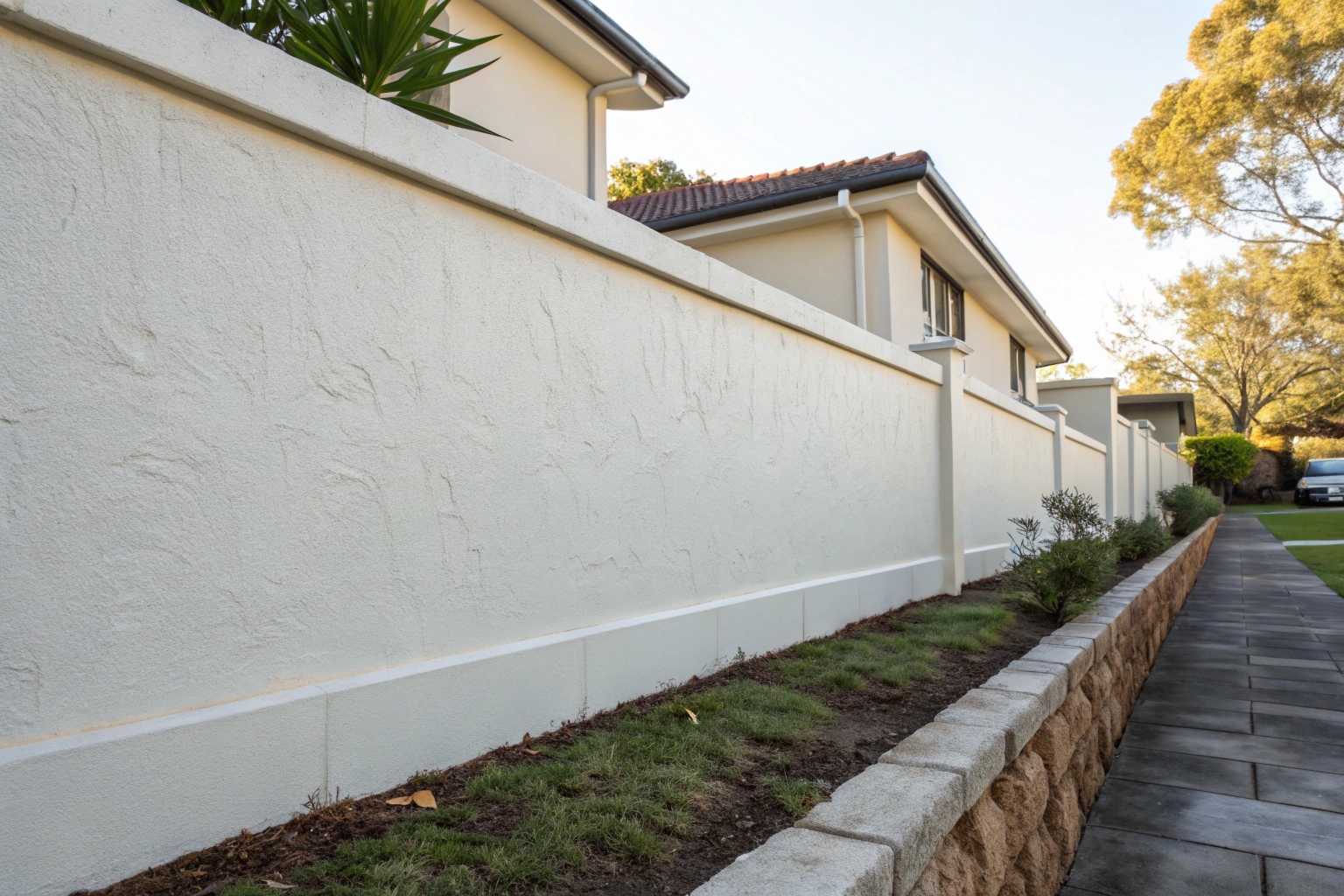
Cement render, acrylic render, and textured finishes all need careful handling. Textured surfaces trap mould and grime in the grooves — chemical treatment does the work pressure alone never could. Acrylic render is particularly vulnerable to high-pressure damage.
Other Materials and Additional Areas
Vinyl cladding, Hardiplank, stone features, metal cladding, and combination exteriors are all surfaces we work with regularly. Beyond the main walls, we include eaves and soffits, window frames and sills, doors and entry trims, garage doors, and fascias as part of a complete exterior clean.
Soft Wash vs Pressure Washing – The Right Method Makes All the Difference
This is probably the most important thing to understand before anyone touches your home’s exterior. The method matters just as much as the cleaning itself.
Soft Wash – What We Use on Most Homes
Soft washing uses low pressure combined with professional-grade cleaning solutions to break down mould, salt, and grime at the source. It’s the industry-recommended approach for painted surfaces, render, and weatherboard — it cleans without putting your paint or sealants at risk, and because it kills mould at the root rather than just blasting the surface off, the results last significantly longer.
When We Use Higher Pressure
Unpainted natural brick where higher pressure is safe, concrete paths and driveway areas, heavily soiled sections requiring extra attention, and specific stubborn staining that chemical treatment alone won’t shift.
Why Soft Wash Wins for House Exteriors
Soft wash kills mould at the root, is safe for all painted surfaces, protects sealants, and delivers longer-lasting results. High pressure does none of those things on a painted exterior.
The DIY Risk Nobody Talks About
Hiring a pressure washer from the hardware store and going to town on your weatherboard or render is one of the fastest ways to create a much bigger problem. High pressure strips paint, forces water behind cladding, and can invalidate paint warranties. What starts as a weekend clean-up can end in repair bills that dwarf the cost of doing it properly in the first place.
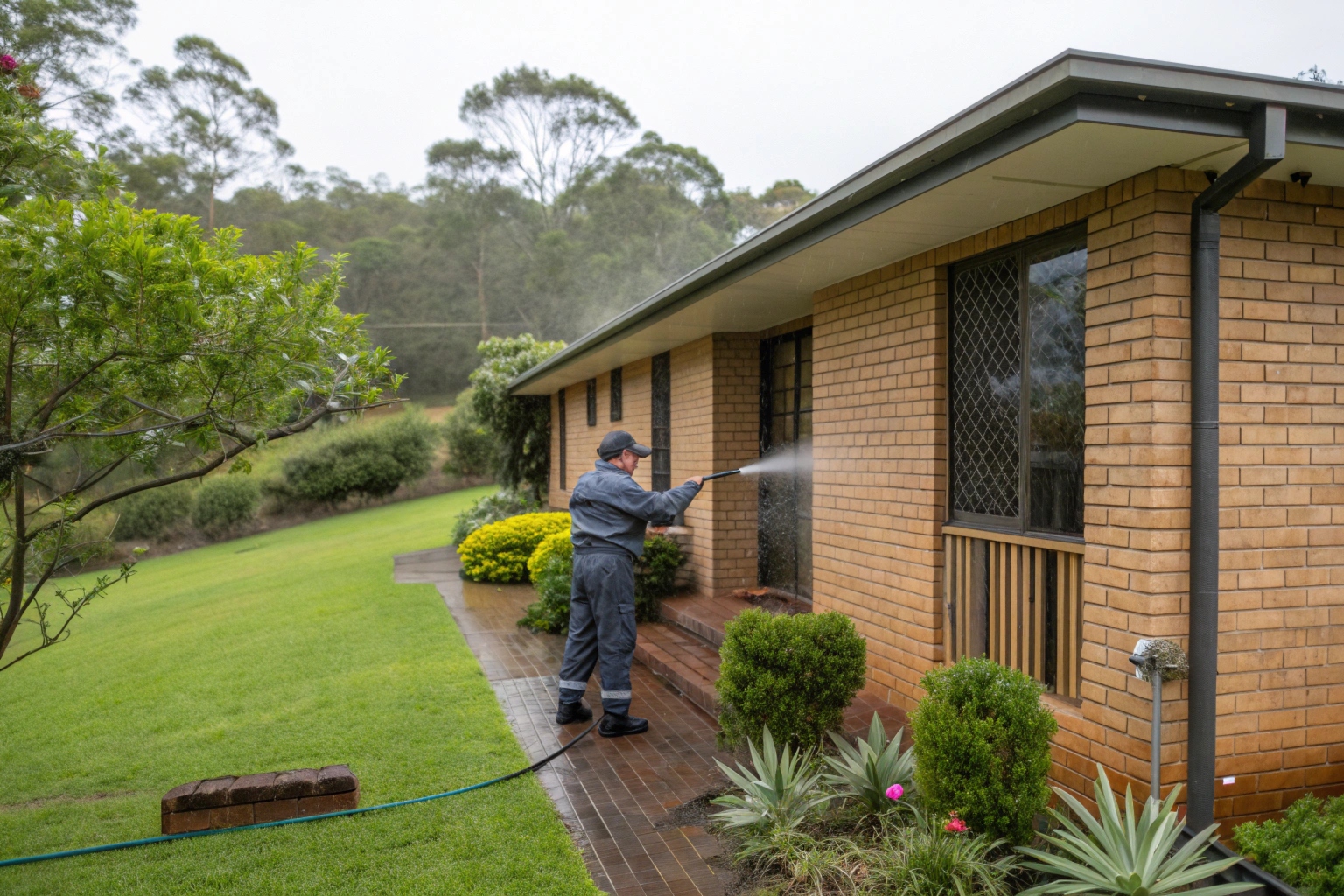
Our House Washing Process – How We Do It
There’s a big difference between someone showing up with a pressure washer and blasting your walls, and an actual professional soft wash service. Here’s exactly what happens when we come out to your property.
1. Property Assessment
Before anything gets wet, we walk the property first. We’re identifying surface types, checking for any existing damage that needs noting, and planning the right approach for each section of the exterior. Your gardens and landscaping get protected before we start — not as an afterthought.
2. Pre-Treatment
Cleaning solution goes on first, with specific attention to any mould-affected sections. We let it dwell, because that’s where the real work happens — the chemical action breaks down mould at the root and loosens salt deposits before water even enters the equation. Plants get pre-wetted as a protective measure before any product contact.
3. Soft Wash Application
We work top to bottom, systematically, so nothing cleaned higher up gets re-contaminated as we move down the wall. Low-pressure, even coverage across every exterior surface — including eaves, soffits, window frames, and trims. Problem areas like shaded walls and south-facing sections get the extra attention they need.
4. Thorough Rinse and Spot Treatment
Once the solution has done its job, everything gets a complete rinse — gentle pressure, no residue left behind. Then we do a final quality check across the whole exterior. Any sections that need an additional pass get it. We don’t call a job done until the full exterior meets the standard, not just the sections that cleaned up easily.
Equipment That Actually Makes a Difference
Professional soft wash systems, appropriate pressure control, and eco-friendly chemicals designed for coastal conditions. The kind of setup — and technique — that hire shop equipment simply can’t replicate.
What We Remove – Complete Exterior Cleaning
Newcastle homes collect a very specific cocktail of grime that you just don’t see in the same way further inland. Here’s what a professional house washing Newcastle service actually clears off your exterior.
Salt and Coastal Grime
That white chalky residue around your window frames and along your brick courses isn’t just unsightly — it’s corrosive. Sea spray deposits salt on every exposed surface, and it keeps building with every onshore wind. Beachside properties cop it worst, but even homes a few kilometres back from the water are dealing with meaningful salt accumulation. Left alone, it works its way into paint, sealants, and masonry and starts breaking them down from the surface inward.
Mould and Algae
Black mould on rendered walls, green algae creeping along weatherboard in shaded areas, the dark streaking that runs down from your eaves after a humid summer — all of it comes off. Soft wash kills mould at the root, which means you’re not just cleaning the surface appearance, you’re actually interrupting the growth cycle. That’s why results from a proper soft wash last considerably longer than anything you’d get from pressure alone.
General Buildup and Weather Staining
Dirt, dust, cobwebs, pollen, bird droppings, and the general atmospheric pollution that settles on every surface over months and years. Storm seasons in Newcastle leave residue that most homeowners don’t even register until they see the before and after side by side.
Newcastle Coastal Expertise and Timing
There’s a real difference between a cleaning company that works across general residential properties and one that spends the majority of their time on coastal homes in Newcastle and Lake Macquarie. The challenges here are specific, and the approach needs to match.
Salt Damage — What We See Every Day
Not all Newcastle properties cop the same level of exposure. Beachside homes in Merewether, Bar Beach, and Newcastle Beach deal with direct salt spray daily — north and east-facing walls take the brunt of it. Properties a few suburbs back experience meaningful accumulation too, just on a slightly longer cycle. Understanding the difference between a heavily exposed beachfront property and a more sheltered home in Charlestown or Kotara means recommending the right cleaning frequency for each situation.
Heritage and Character Properties
Newcastle has a genuinely beautiful stock of older homes — the heritage weatherboards through Cooks Hill, The Junction, and Hamilton, the character brick homes throughout the inner suburbs, the early twentieth century builds that need a careful hand rather than a high-pressure blast. We work on these properties regularly and treat them accordingly.
How Often and When to Book
Coastal properties sit at the 12 to 18 month mark as a general guide. Beachfront homes genuinely benefit from annual attention. Standard locations further from the water can stretch to two to three years, though Newcastle’s humidity means most homeowners are ready for a wash well before that point.
Spring and autumn are both excellent timing choices — spring for a fresh start heading into summer, autumn to remove storm residue before winter. We work year-round though, and the best time to book is simply when you notice the buildup starting.
For pre-sale preparation, book two to three weeks before photography day. That window allows the exterior to fully dry and treated mould areas to clear completely — and for the cost involved, it’s one of the highest-return preparation steps before going to market.
Frequently Asked Questions
Pricing varies depending on your property, but as a general guide, soft wash exterior cleaning for a single storey three-bedroom home typically starts from around $350 to $550. Double storey homes of a similar size generally run from $500 to $900 depending on access and complexity. Larger properties are priced on assessment, and commercial work is quoted on a per square metre basis — generally $3.50 to $8.00 per square metre depending on surface type and condition. Property size, height, surface type, mould severity, and coastal exposure level all feed into the final number, which is why we provide free on-site quotes rather than guessing over the phone.
A professional house wash at $400 to $600 sits at a fraction of what a full exterior repaint costs — typically $5,000 to $15,000 for a Newcastle home depending on size. When you frame it as maintenance that actively delays that repaint by years, the maths is pretty straightforward. Regular washing isn’t an expense, it’s what you spend to avoid a much bigger one further down the road.
No — soft washing is specifically designed for painted surfaces. The low pressure combined with professional cleaning solution cleans effectively without putting any stress on paint or sealants. It’s high-pressure washing that damages paint, strips sealant, and forces water behind cladding. Soft wash is the industry-recommended method for any painted exterior for exactly that reason. A lot of homeowners assume all exterior cleaning is the same — it really isn’t. The difference between soft wash and high-pressure washing on a painted surface is the difference between a clean house and a house that needs repainting. Professional soft wash equipment runs at a fraction of the pressure a hire shop machine delivers, and the cleaning solution does the actual work. Your paint stays intact, your sealants stay in place, and nothing gets forced behind your cladding or into your weatherboard joins.
Coastal properties sit at the 12 to 18 month mark as a general guide. Standard locations further from the water can go two to three years between washes, though Newcastle’s year-round humidity means mould growth happens faster here than most homeowners expect. Properties with significant shade, north or east-facing elevations with direct sea exposure, or any home where mould is already visibly returning should lean toward the shorter end of that range regardless of suburb. The honest answer is that the right frequency depends on your specific property — a beachfront home in Merewether sitting fully exposed on a north-facing block is a completely different situation to a brick home in Kotara with good tree cover. What we generally find is that homeowners who stay on a regular cycle spend less overall, because the cleaning is easier, faster, and the surfaces never reach the point where damage starts to accumulate. Waiting until it looks bad usually means you’re already behind.
Yes — we’re fully equipped for multi-storey homes with safe access methods, appropriate equipment, and the insurance coverage to match. Two-storey homes are quoted after a site assessment rather than over the phone, since access and complexity vary considerably from one property to the next.
Soft wash kills mould at the root rather than just removing the surface appearance — which is the key difference between a professional treatment and a DIY pressure wash. Because the mould organism itself is treated rather than just blasted off, results last considerably longer and regrowth is significantly slower.
Local Cleaners you can Rely on in Newcastle, NSW.
