
How to Remove Mould From Bathroom Tiles

Apply a mould-killing solution or bleach-water mix (1:4 ratio) directly to affected tiles and grout. Let it sit for 15 minutes, scrub grout lines firmly with a stiff brush, then rinse and dry completely.
For lasting results:
- Treat grout lines, not just tile surfaces
- Replace mouldy silicone sealant — cleaning won’t remove mould that’s embedded in the seal
- Apply grout sealant after cleaning to block future moisture
- Run your exhaust fan for 20 minutes after every shower
In Newcastle’s coastal climate, DIY solutions often only provide temporary relief. Mould roots stay in porous grout and regrow within weeks.
For persistent or recurring bathroom mould, professional treatment removes mould at the root and applies protective coatings that DIY methods can’t replicate.

Why Newcastle Bathrooms Are a Hotspot for Mould
Most places get a dry spell. Newcastle doesn’t.
Our coastal air stays damp year-round. Salt particles from the ocean settle into grout and silicone seals, holding moisture in long after your shower is done. Add older homes with small bathrooms and poor ventilation, and mould doesn’t just grow — it stays.
A few reasons Newcastle bathrooms struggle more than most:
- Coastal humidity that never fully clears between showers
- Salt air absorbed into porous grout and tile surfaces
- Year-round warmth — mould never gets a cold season to slow it down
- Older home designs with poor ventilation and limited airflow
- Small bathroom layouts with no exhaust fan or north-facing windows
It’s not a cleaning problem. It’s a climate problem — and it needs a climate-specific solution.
Common Bathroom Mould Areas (Where It Hides)
Mould doesn’t just grow where you can see it. By the time it’s visible, it’s usually been spreading for a while.
These are the most common spots we find it in Newcastle bathrooms:
- Tile grout — porous and holds moisture long after surfaces dry
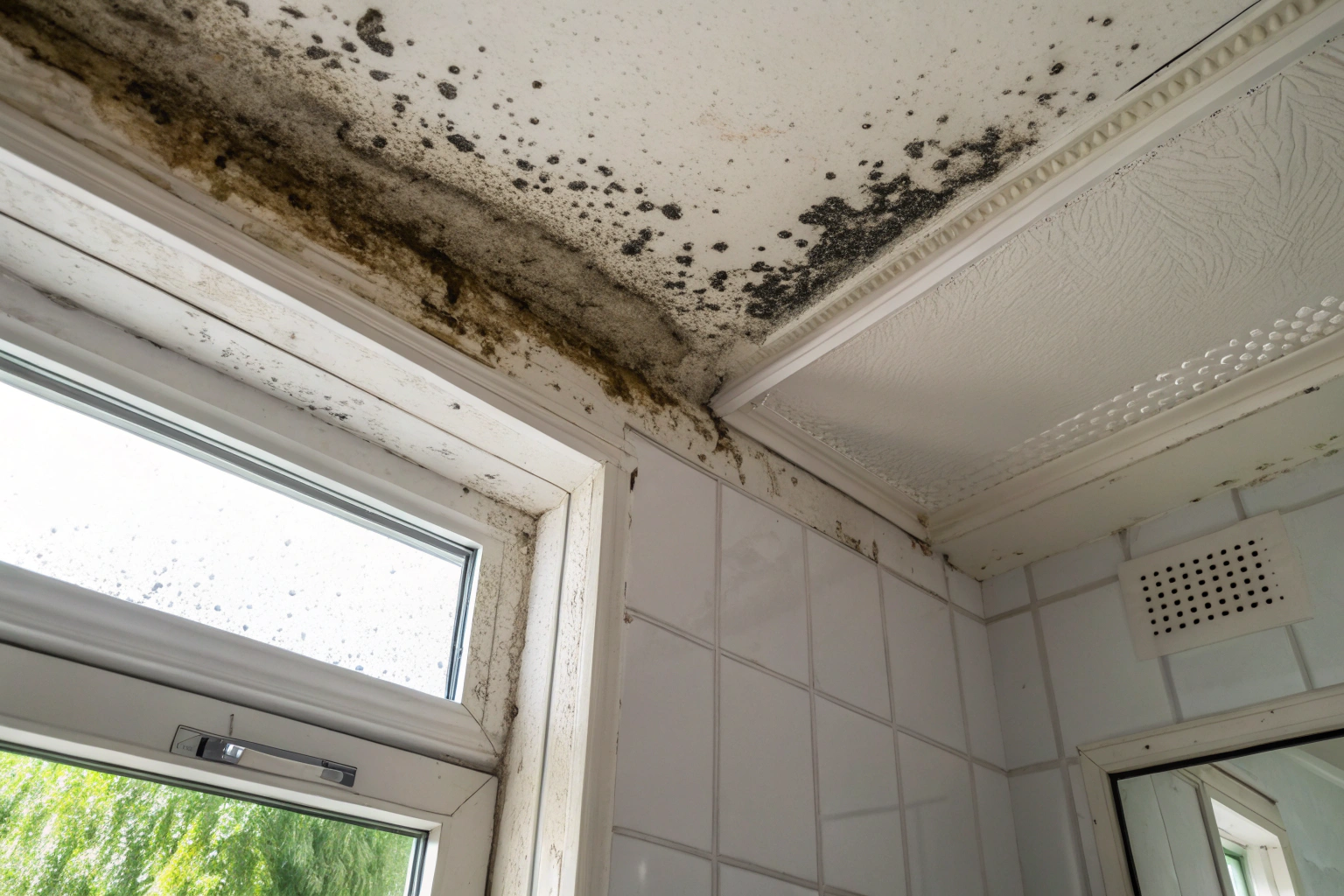
- Ceiling corners — warm, damp air rises and sits where ventilation is weakest
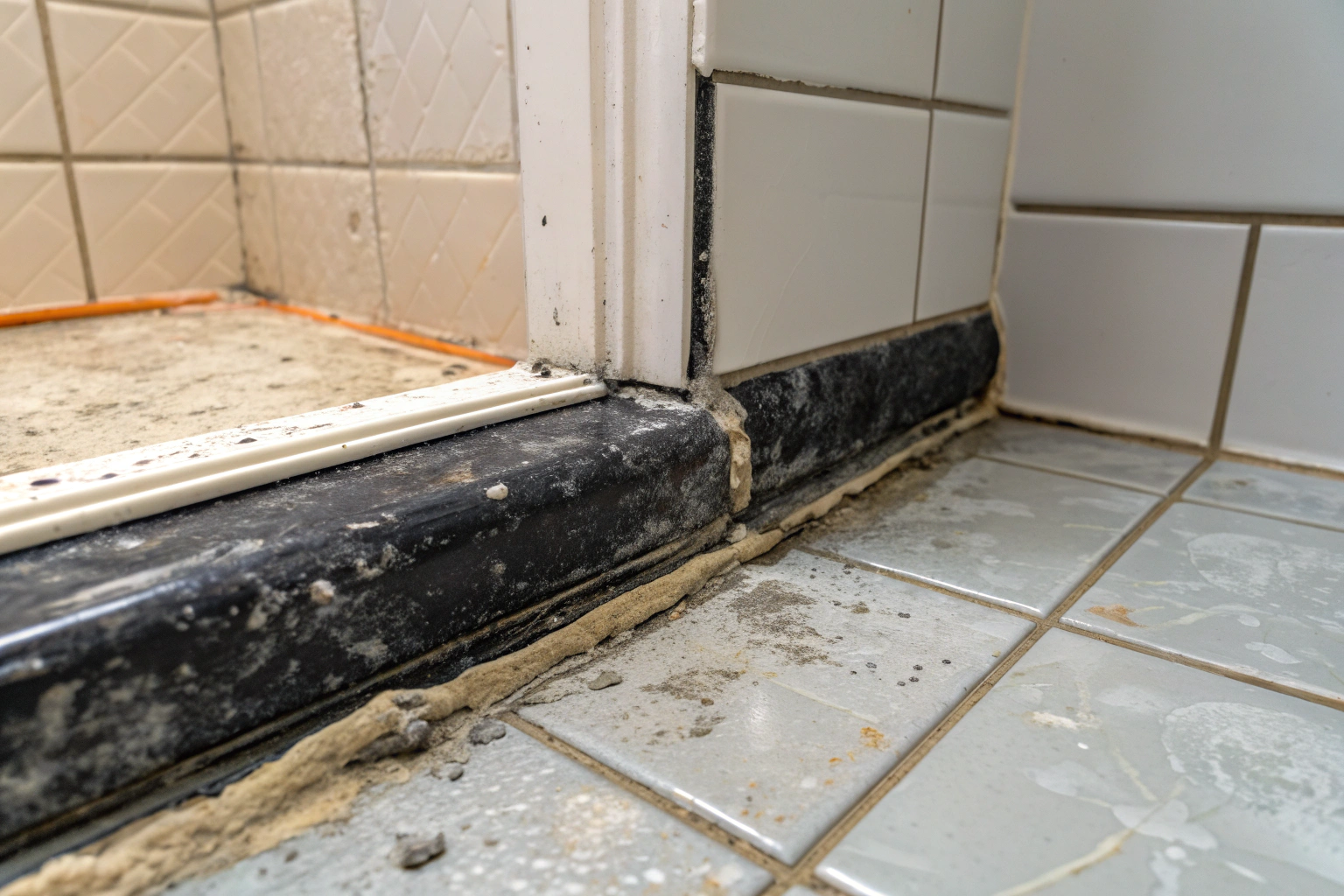
- Silicone seals — once mould gets into silicone, cleaning won’t remove it
- Shower screen edges — water pools and sits here after every shower
- Behind the vanity — dark, damp, and rarely cleaned
- Exhaust fan surrounds — dust and moisture combine right where airflow is meant to happen
- Window frames — condensation builds up and never fully dries
- Door architraves — often overlooked, but collect moisture from steam
- Under the sink — slow leaks and poor airflow make this a common problem spot
If you’re only treating what you can see, you’re missing half the problem.
Types of Bathroom Mould We Treat
Not all bathroom mould is the same. Knowing what you’re dealing with helps explain why some treatments work and others don’t.
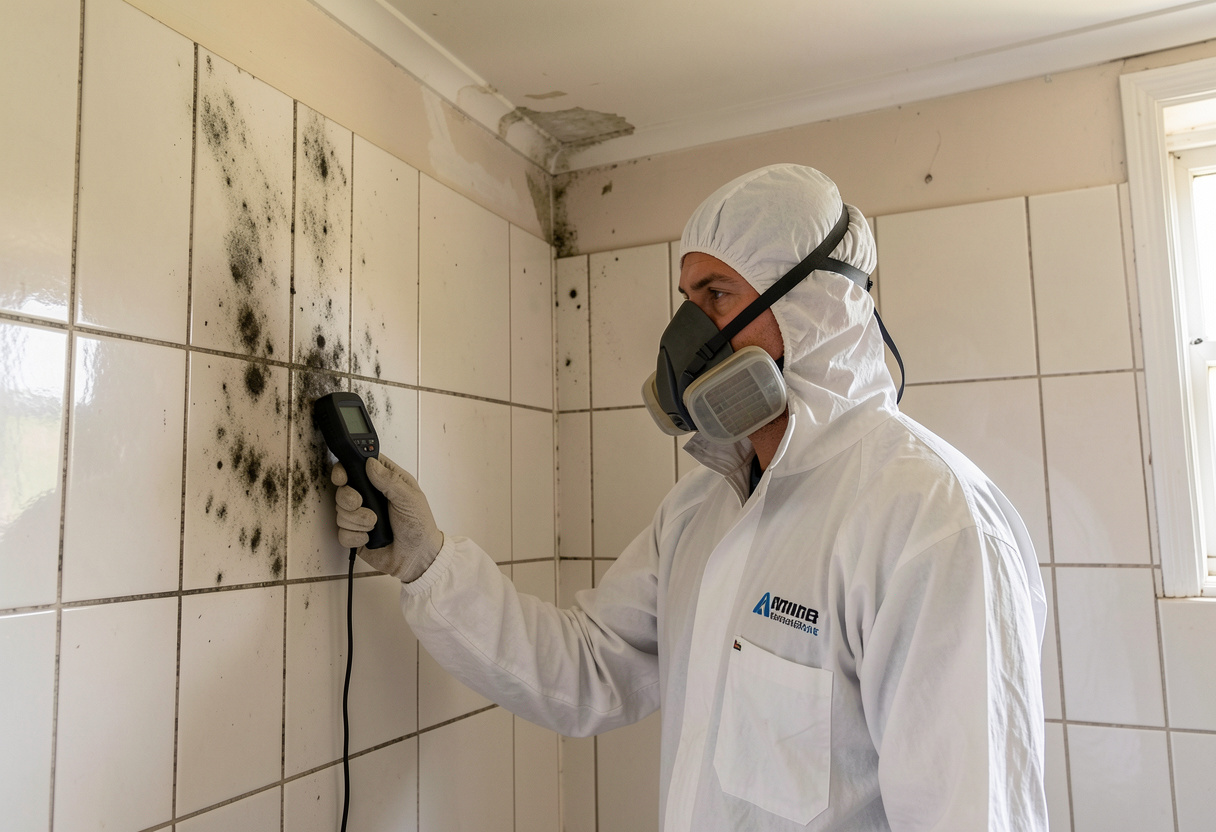
Black mould in grout: The most common type in Newcastle bathrooms. It grows deep into porous grout lines and won’t shift with surface cleaning alone.
Pink mould (Serratia marcescens): Not actually mould — it’s a bacterium that thrives in damp bathrooms. Shows up as pink or orange staining around drains, shower floors, and soap dishes. Comes back quickly without proper treatment.
Ceiling mould: Caused by steam rising and sitting on cool ceiling surfaces. Often covers a wider area than it appears from ground level.
Mildew: Early stage surface growth — grey or white, powdery in texture. Easier to treat than black mould, but a sign that conditions in your bathroom need addressing.
Shower seal mould: Grows inside silicone rather than on top of it. It can’t be cleaned out — the silicone needs to be removed and replaced to fix it properly.
Our Bathroom Mould Removal Process
Initial Assessment: We inspect the full bathroom — grout lines, ceiling, silicone seals, and hidden areas. This tells us what type of mould you have, how deep it’s gone, and what’s causing it.
Tile & Grout Treatment: We apply a professional-grade solution directly into grout lines and tile surfaces. It penetrates porous grout to kill mould at the root — not just bleach the surface.
Ceiling Mould Removal: We use treatments safe for painted surfaces that kill mould without causing damage. We then assess whether a mould-resistant coating is needed to prevent it from returning.
Shower & Seal Treatment: Where silicone seals are mouldy beyond cleaning, we remove and replace them completely. Mould that’s grown inside the seal can’t be scrubbed out.
Protection Application: We apply protective sealant to grout lines and treated surfaces. This blocks moisture penetration and slows future mould growth significantly.
Grout & Tile Restoration
Why DIY Bathroom Mould Removal Falls Short in Newcastle
Most bathroom mould products clean the surface. Newcastle’s climate demands more than that.
Here’s why DIY rarely solves the problem long-term:
- Surface treatment only — supermarket sprays bleach the top layer, but leaves mould roots alive in porous grout
- Coastal regrowth cycle — Newcastle’s humidity means mould returns faster than anywhere else, often within weeks
- Product limitations — most household products aren’t strong enough to penetrate grout or treat ceiling mould safely
- Hidden areas missed — behind vanities, exhaust fan surrounds, and door architraves rarely get treated
- Silicone can’t be cleaned — once mould is inside the seal, the only fix is removal and replacement
How to Prevent Bathroom Mould From Coming Back
Treatment works best when good habits follow it up. Here’s what makes the biggest difference.
Ventilation Habits: Run your exhaust fan during every shower and for at least 20 minutes after. No exhaust fan? Open a window or leave the bathroom door open to let steam escape.
Daily Moisture Management: Give shower walls and screens a quick squeegee after each use. It takes 30 seconds and removes most of the moisture that mould needs to grow.
Newcastle-Specific Tips
- Wipe down window frames and sills weekly — salt air condensation builds up fast
- Check silicone seals every few months and reseal at the first sign of cracking
- Don’t leave damp towels or bath mats sitting on the floor
- Book a professional clean once a year — Newcastle’s coastal conditions mean bathrooms need more maintenance than most
Frequently Asked Questions About Bathroom Mould Removal in Newcastle
How long does professional bathroom mould removal take?
Most bathrooms take between 2 and 3 hours, depending on the size and how severe the mould is. If silicone replacement is needed, we factor that into the same visit where possible.
Is bathroom mould dangerous to my family's health?
It can be. Black mould and mould spores in enclosed spaces like bathrooms can trigger allergies, asthma, and respiratory irritation — especially in kids and elderly family members. We always recommend treating it sooner rather than later.
Why does mould keep coming back after I clean it?
Because most cleaning products only treat the surface. In Newcastle’s coastal climate, mould roots stay alive inside porous grout and regrow quickly. We treat the root cause, not just what’s visible.
Can you remove mould from bathroom ceilings without damaging the paint?
es. We use treatments specifically suited to painted ceiling surfaces. In most cases, the ceiling comes up well — if there’s any paint damage from the mould itself, we’ll let you know during the assessment.
Do I need to leave the house during treatment?
We recommend ventilating the bathroom well during and after treatment. Most households are fine to stay home — we’ll advise you on the day based on the products being used and your household situation.
How is professional grout mould removal different from what I can do myself?
We use commercial-grade solutions that penetrate deep into grout rather than sitting on the surface. We also seal grout after treatment, which is the step most DIY attempts skip — and it’s what makes the results last.
Can mouldy silicone be cleaned, or does it always need replacing?
Once mould has grown inside silicone, it can’t be cleaned out — it needs to come out completely. We remove the old sealant, treat the area underneath, and apply fresh silicone. It’s the only way to fix it properly.
Local Cleaners you can Rely on in Newcastle, NSW.
