
One Bedroom - A$472.50
Two Bedrooms - A$537.50
Three Bedrooms - A$602.50
Four Bedrooms - A$667.50
Carpet Cleaning - A$195.00
Why Clean Your Driveway?
Your driveway is the first thing people see when they arrive at your home. Before they’ve knocked on the door, before they’ve seen your garden or your freshly painted fence — they’ve already clocked the state of your driveway. A stained, grimy surface sends a message you probably don’t intend. A clean one? It says this property is looked after.
First Impressions Count
Visitors, neighbours, real estate agents, potential buyers — they all form an opinion based on what’s in front of them. A driveway covered in oil patches and black tyre streaks makes even a well-maintained home look neglected. A clean, restored surface transforms the whole street frontage. It’s one of those things you don’t fully appreciate until you see the before and after side by side.
Common Driveway Problems We See
• Oil and grease stains — from cars, motorbikes, or lawn equipment
• Tyre marks and rubber residue — especially near the garage entrance
• Dirt and grime buildup — from foot traffic, vehicles, and general weathering
• Algae and mould growth — particularly in shaded areas
• Rust stains — from metal furniture, downpipes, or garden edging
• Paint splatters — leftover from renovation work
Newcastle’s Specific Challenges
Living near the coast comes with a trade-off. Salt buildup accelerates surface deterioration and leaves white residue on concrete and pavers. High humidity means mould and algae return faster than they would inland. Sand grit acts like fine sandpaper on exposed aggregate. Storm weathering does the rest.
Thinking About Selling?
Driveway pressure cleaning Newcastle is honestly one of the cheapest curb appeal improvements you can make before a sale. It’s completed in a couple of hours, photographs brilliantly for listings, and gives buyers the impression of a well-cared-for property — before they’ve even stepped inside.

Driveway Types We Clean
Not all driveways are the same, and cleaning them like they are is where a lot of DIY attempts go wrong. Too much pressure on the wrong surface causes pitting, etching, or damage to the finish. Too little and you’re just moving dirt around. We match our approach to the surface in front of us — every time.
Concrete Driveways
Plain concrete is the most common driveway type across Newcastle, and it responds brilliantly to professional pressure cleaning. But concrete isn’t just concrete anymore.
• Plain concrete — straightforward clean, excellent results
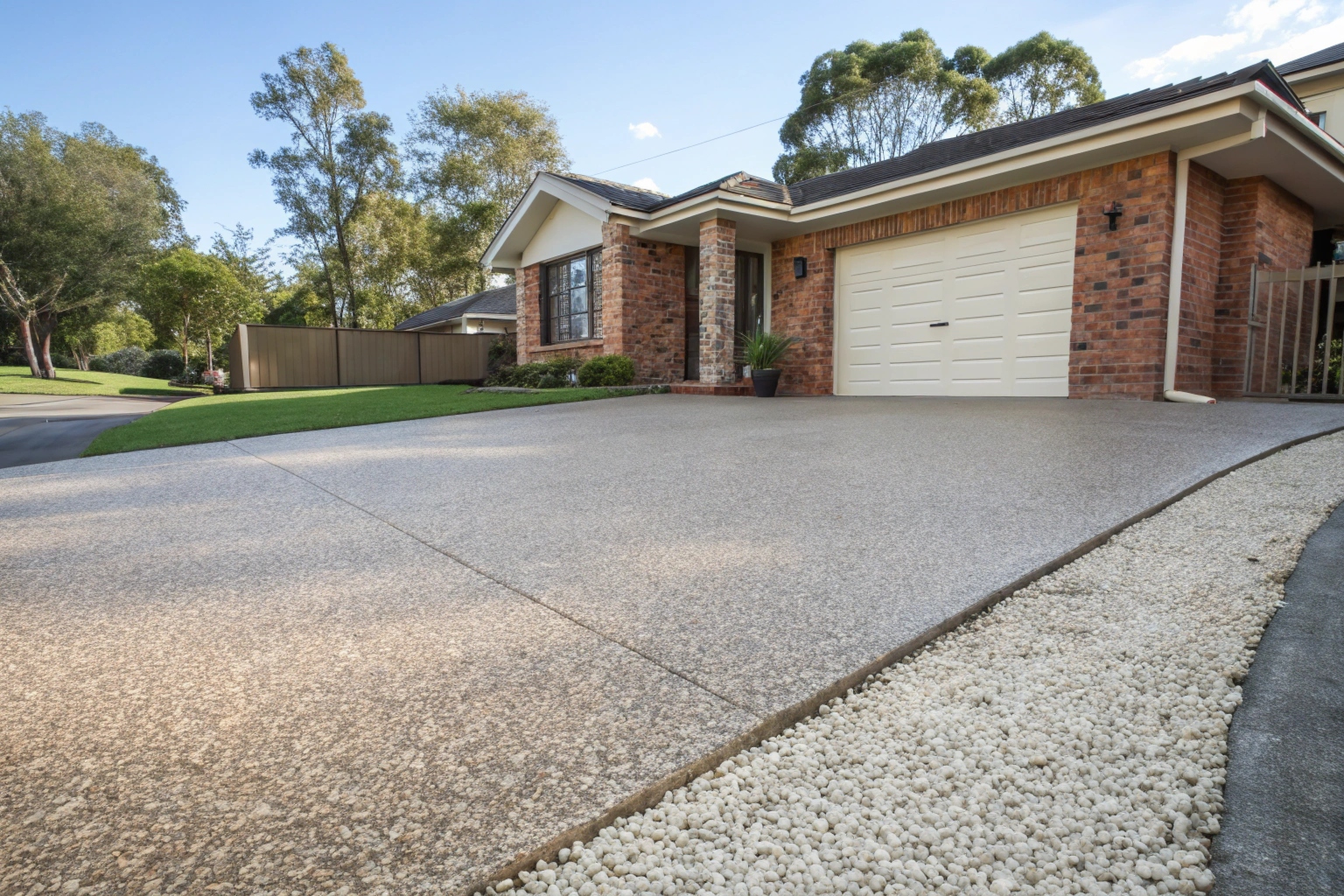
• Exposed aggregate — requires careful pressure to clean without dislodging stones
• Coloured concrete — gentler approach to preserve the pigment
• Stamped and decorative concrete — attention to pattern grooves and edges
Each of these needs a slightly different technique. Get it wrong and you damage the finish. Get it right and the transformation is dramatic.
Paver Driveways
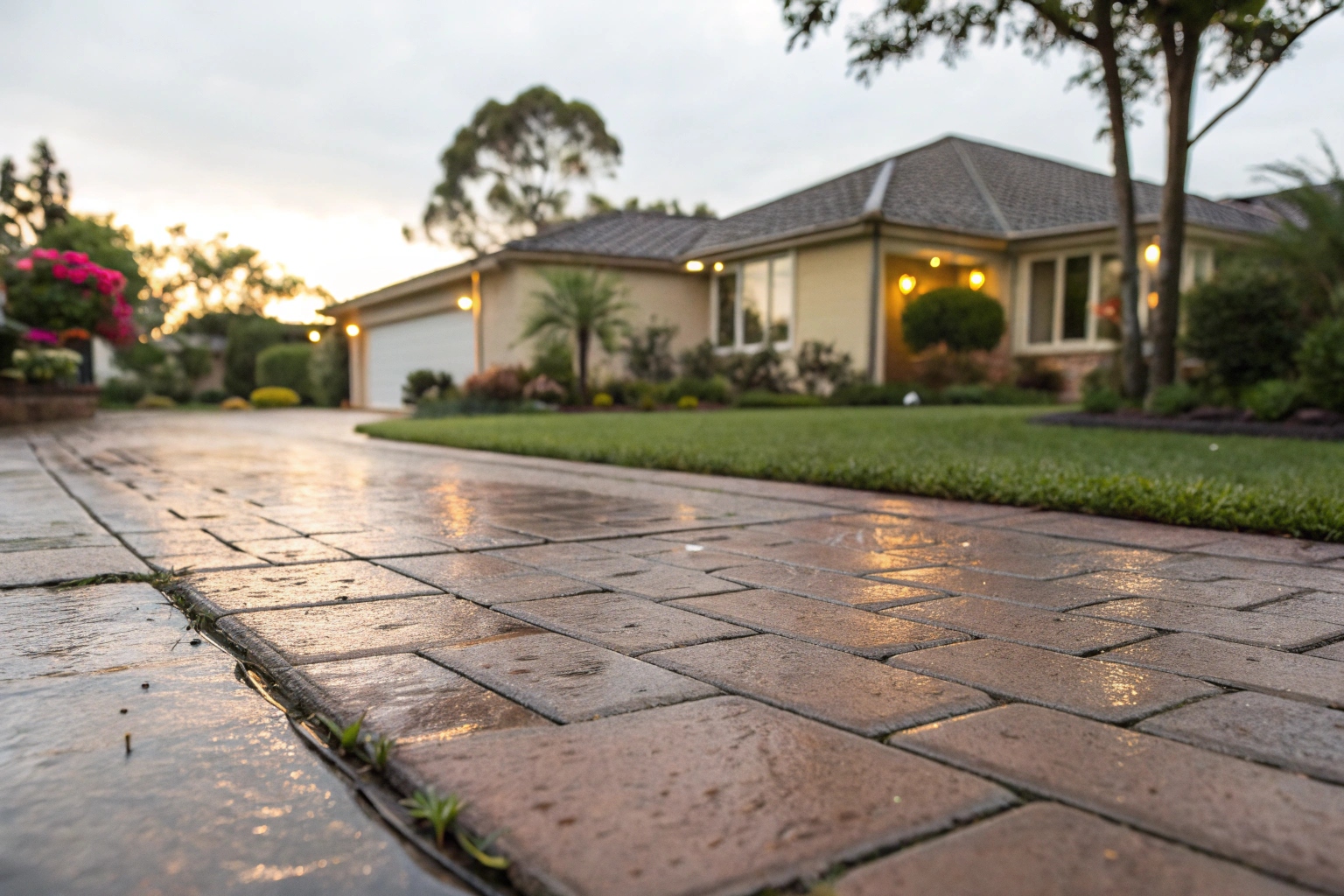
Pavers trap dirt and organic growth in the joints, which is where a lot of the discolouration actually lives. We clean the surface and the gaps properly.
• Concrete pavers
• Clay brick pavers
• Natural stone pavers
• Interlocking patterns
We also offer a re-sanding option after cleaning — replacing the jointing sand that gets washed out during the process — which keeps your paver surface stable and looking sharp.
Asphalt Driveways
Asphalt needs a gentler touch. Too much pressure and you’ll lift the surface or cause cracking. We use specialised cleaning techniques that get results without causing damage.
Other Surfaces
• Resin-bound driveways
• Combination surfaces (concrete apron with paver centre, for example)
What’s Common in Newcastle
Exposed aggregate is hugely popular throughout the area. Sandstone features appear in older, heritage-style properties in suburbs like Hamilton and Merewether. A lot of the older plain concrete driveways around Newcastle need a gentler approach because the surface has softened with age — something we assess before we start.
Our Driveway Cleaning Process
There’s a big difference between pointing a pressure washer at a driveway and actually cleaning it properly. Our process is methodical — each step builds on the last to get the best possible result without damaging your surface.
Step 1 — Inspection
Before a drop of water hits your driveway, we take a proper look. We’re assessing the surface type, the condition of the concrete or pavers, identifying specific stains, and determining the right pressure and chemical approach for what’s in front of us. This is where we also have an honest conversation about what’s realistically achievable with older, deeply penetrated stains.
Step 2 — Pre-Treatment
Oil stains, rust marks, and heavy organic growth don’t respond to pressure alone — they need chemical treatment first. We apply the appropriate degreaser or stain treatment and allow proper dwell time so the product can break down what’s bonded to your surface. Skipping this step is why DIY results are often disappointing.
Step 3 — High-Pressure Cleaning
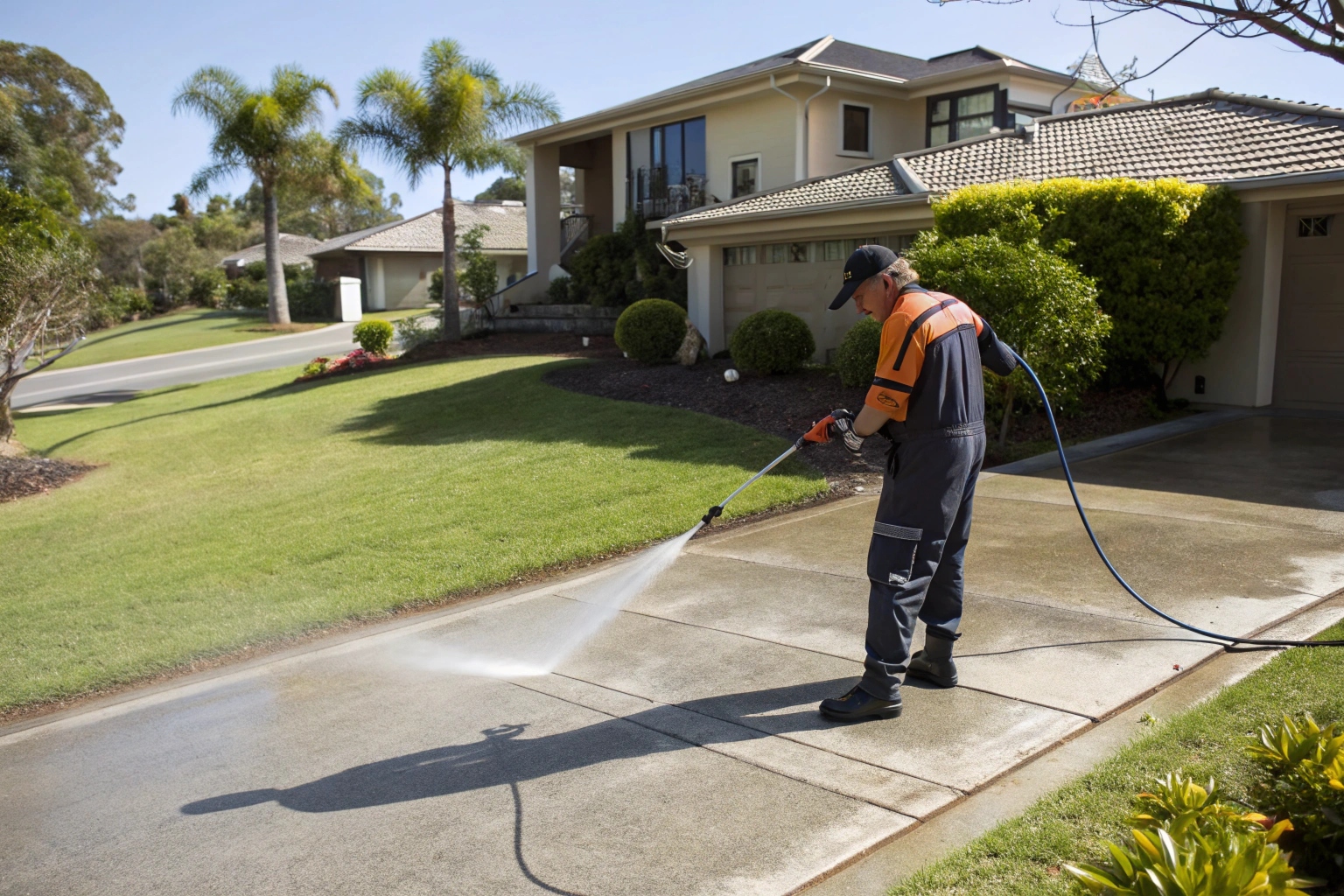
This is where the commercial equipment earns its keep. We use a surface cleaner attachment — a rotating bar tool that delivers even, consistent coverage — rather than a wand that creates streaking lines. Systematic passes across the whole driveway, with focused attention on edges, corners, and stubborn areas.
Step 4 — Stain Treatment
Some stains need a second round. Severe oil patches, for example, often get a hot water extraction pass — heat breaks down petroleum-based stains in a way cold water simply can’t replicate.
Step 5 — Rinse and Inspect
We do a thorough final rinse and walk the whole driveway. Any areas that need a touch-up get one before we pack up.
Step 6 — Optional Sealing
Once the surface is clean and dry, sealing is available to lock in the result and protect against future staining — particularly worthwhile for driveway pressure cleaning Newcastle coastal properties dealing with salt air and humidity.
Stain Removal Capabilities
This is the section most people are really reading for. The honest answer is — we can remove or significantly improve the vast majority of driveway stains. But we’re not going to tell you every stain disappears completely, because that’s not always true, and you deserve a straight answer before we start.
What We Can Remove
Oil and Grease Stains
• Most automotive oil stains — including older ones
• Transmission fluid and brake fluid
• Lawn mower and equipment oil
• Hot water extraction gives the best results on petroleum-based stains — heat breaks down the compounds in a way cold pressure washing can’t match
Tyre Marks
• Rubber residue from hard braking or tight turns
• Black streaking near garage entrances
• Brake dust buildup along edges
Other Common Stains
• Rust marks from downpipes, metal furniture, or garden edging
• Paint splatters from renovation work
• Algae, mould, and lichen growth
• General dirt, grime, and organic buildup
Realistic Expectations
We’ll be upfront with you during the inspection — it’s part of the process. Very old, deeply penetrated oil stains that have been sitting in concrete for years will lighten significantly, but may not disappear completely. Once oil works its way past the surface layer of concrete, no amount of pressure or chemical treatment will fully reverse it.
What we can promise is an honest assessment before we start, not an awkward conversation after.
The Best Approach to Staining
Fresh stains are always easier to treat than old ones. A quick response — absorbing the spill, applying a degreaser, hosing off — prevents the kind of deep penetration that becomes a permanent reminder. Regular driveway washing Newcastle maintenance is genuinely cheaper than trying to restore a driveway that’s been neglected for years.
Sealing Your Driveway
Getting your driveway professionally cleaned is satisfying. Keeping it that way is where sealing comes in. Think of it like putting a clear coat on a freshly polished car — it locks in the result and gives the surface a fighting chance against everything that’s coming for it next.
Why Sealing Makes Sense
A freshly cleaned driveway is actually at its most vulnerable. The surface is open, the pores are clear, and the next oil drip or coastal downpour is going to find its way in faster than it did before. Sealing closes that window.
Benefits of driveway sealing:
• Prevents oil and stains from penetrating the surface
• Makes future cleaning significantly easier — spills wipe up rather than soak in
• Enhances colour and brings out the finish in exposed aggregate and pavers
• Protects against weathering, UV damage, and general wear
• Extends the life of your surface
• Adds water resistance that matters in Newcastle’s wet season
When to Seal
• Immediately after a professional clean — the surface is prepped and ready
• New driveways, after the concrete has fully cured
• Every 2-3 years as part of regular maintenance
• Before listing your property for sale — the enhanced colour photographs brilliantly
Types of Sealer We Use
• Penetrating sealers — soak into the surface and protect from within, invisible finish, natural look preserved
• Surface sealers — sit on top, provide a slight sheen, excellent stain barrier
• Colour-enhancing options — deepen and enrich the existing tone of your concrete or pavers
The Newcastle Climate Factor
This one matters more here than it does in most places. Coastal properties deal with salt air year-round — it breaks down unsealed concrete surfaces faster than anything else. High humidity keeps conditions ideal for mould and algae regrowth. Sealing after your concrete driveway cleaning significantly slows both processes down, meaning you’re not back to square one within twelve months.
For properties near the waterfront — Merewether, Bar Beach, Redhead, Swansea — sealing isn’t just a nice add-on. It’s genuinely the smart move.
DIY vs Professional Results
Hiring a pressure washer from the hardware store on a Saturday morning seems like a reasonable plan. It’s cheaper upfront, you’re in control, and how hard can it be? The reality is that most people who’ve tried it will tell you the same thing — it took way longer than expected, the results were patchy, and the driveway still didn’t look right.
Here’s why professional driveway pressure cleaning Newcastle consistently delivers results that DIY can’t match.
The Equipment Gap
This is the part that matters most and gets underestimated every time.
| Hire Machine | Our Equipment | |
| Pressure | 2,000 – 3,000 PSI | 3,000 – 4,000+ PSI |
| Hot water capability | No | Yes |
| Surface cleaner tool | Rarely included | Standard |
| Chemical injection | Basic | Commercial grade |
Hot water is a game changer for oil and grease stains. It breaks down petroleum compounds in a way cold water physically cannot. Hire machines almost never offer it.
The Technique Problem
The surface cleaner attachment we use delivers rotating, even coverage across the whole driveway. A handheld wand — which is what most hire setups give you — creates visible lines and streaking if your technique isn’t spot on. And technique takes time to develop.
Common DIY Outcomes
• Streaky, uneven clean with wand lines visible
• Surface damage from incorrect pressure on exposed aggregate or older concrete
• Oil stains that barely shifted despite hours of effort
• Exhausting, physically demanding work for a disappointing result
The Time Reality
• DIY: 4 – 6 hours for a standard double driveway, including setup, cleaning, and pack-up
• Professional: 1 – 2 hours, done properly, while you get on with your weekend
That’s not a small difference. That’s most of a Saturday — and your back will know about it by Sunday.
Frequently Asked Questions
A standard double driveway takes 1 – 2 hours from start to finish. Larger driveways, very heavily stained surfaces, or properties requiring sealing will take a bit longer. We’ll give you a realistic timeframe when we assess your job.
Most oil stains improve significantly — often dramatically. Very old, deeply penetrated stains that have been sitting in the concrete for years may lighten considerably but might not disappear entirely. We assess every driveway honestly before we start so you know what to expect, not after.
It’s not mandatory, but we genuinely recommend it — especially for coastal Newcastle properties. Sealing protects against future staining, slows mould regrowth, and makes your next clean much easier. The surface is perfectly prepped right after a professional clean, so the timing works well.
Most Newcastle homes benefit from an annual professional clean. Coastal properties, or driveways with heavy vehicle use, are better on a 6 – 12 month cycle. Before selling your property, always — no exceptions.
Local Cleaners you can Rely on in Newcastle, NSW.
